
Management of stone disease and BPH: A collaboration between EAUN and Boston Scientific
The ‘Endourology nursing forum: Across the pathway’ brought together urology nurses from across Europe for a focused and interactive educational programme addressing the management of stone disease and benign prostatic hyperplasia (BPH).
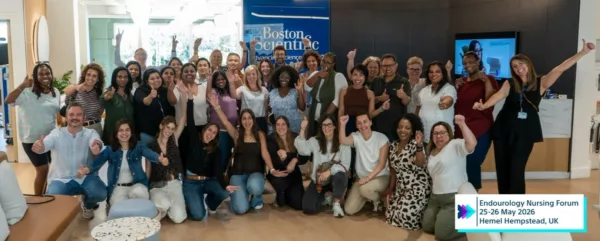
The forum was organised by Boston Scientific in collaboration with the European Association of Urology Nurses (EAUN), reflecting a shared commitment to advancing urological nursing practice through education, collaboration, and exchange of experience. The forum was held as a one-day course and took place at Hempel Hampstead, London, at the end of May.
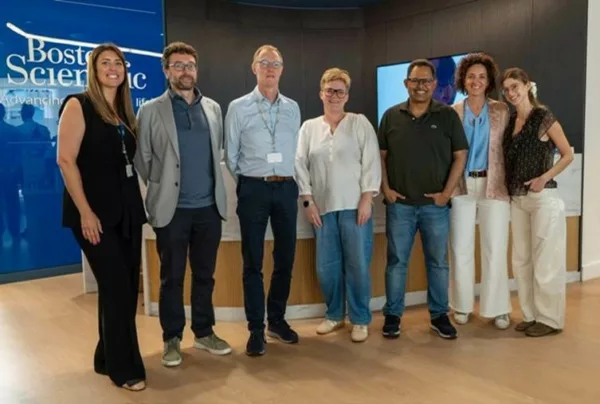
A total of 30 nurses participated, including 15 from the United Kingdom and 15 from Spain. The faculty consisted of two urology nurses representing the EAUN, Ms. Cristina Toneguzzi RN, Specialist Nurse in Urology (IT), and Ms. Rikke Nygaard Knudsen RN, Master in Clinical Nursing and Specialist Nurse in Urology (DK), along with a professor in endourology, Prof. Bhaskar Somani, MRCS, FEBU, FRCS Urol (UK). The faculty ensured a balanced integration of nursing and medical perspectives.
A central concept of the forum was the patient pathway, with all sessions structured to reflect the continuum of care from initial assessment to postoperative follow-up.
The opening session, led by Prof. Bhaskar Somani, ‘Patient pathway & surgical decision-making in stone & BPH’, provided a comprehensive overview of how treatment decisions are made in clinical practice. Particular emphasis was placed on patient variability, clinical complexity, and the importance of aligning treatment choices with patient preferences and expectations. From a nursing perspective, the session highlighted the key role nurses play in supporting continuity of care and facilitating shared decision-making.
Shared decision-making was explored as a fundamental element of patient-centred care, the session was held by Rn. Rikke Nygaard Knudsen. Discussions focused on how nurses can support patients in understanding treatment options, risks, and expected outcomes. Participants reflected on practical challenges, including differences in health literacy, time constraints, and variations in organisational structures. The session encouraged participants to consider how communication strategies and interdisciplinary collaboration can strengthen patient involvement in decision-making processes.
In the session on ‘Pre- & post-operative nursing care across the pathway’ Christina Toneguzzi, Rn. addressed key elements of perioperative care, including pain management, catheter and stent management, haematuria, and discharge planning. Importantly, the session highlighted variations in clinical practice across healthcare systems, creating an opportunity for participants to compare approaches and identify areas for potential improvement.
Patient education and informed consent were addressed by Rikke Nygaard Knudsen, in a dedicated session, emphasising the importance of clear and consistent communication throughout the patient pathway. The discussion underscored the nurse’s role in ensuring that patients are adequately prepared for procedures and understand both benefits and potential complications. Concepts such as health literacy, timing of information, and repetition of key messages were identified as critical components of effective patient education.
The session ‘What happens in theatre? Stone & BPH procedures explained’ aimed to strengthen understanding of endourological procedures among nurses who are not routinely working in the operating theatre. By providing insight into surgical workflows, equipment, and intraoperative considerations, Prof. Bhaskar Somani contributed to improving the continuity of care and enabling nurses to better prepare patients preoperatively and support them post-operatively. Innovation was also explored through a session focusing on virtual reality (VR) and simulation tools. These technologies were presented as potential enablers for both staff education and patient engagement. Examples included the use of simulation in surgical training, as well as the development of virtual platforms to support patient education and follow-up care. Participants reflected on how such tools could be implemented in their own clinical settings.
A key strength of the forum was its interactive format, combining short presentations with discussion, case-based learning, and audience participation. This created a dynamic learning environment that encouraged reflection and exchange of perspectives. The international composition of participants further enriched the discussions, highlighting differences in clinical practice, organisation of care, and the evolving role of urology nurses across Europe.
The ’Endourology nursing forum: Across the pathway’ provided a valuable platform for European urology nurses to reflect on their practice, share experiences, and explore new approaches to patient care in stone disease and BPH. By focusing on the full patient pathway and emphasising the nursing contribution at each stage, the forum reinforced the importance of a holistic, patient-centred approach. The combination of interdisciplinary collaboration, practical insights, and innovation makes this type of educational initiative highly relevant for the continued development of urological nursing practice within Europe.
Suggested for you
See allThere are no news articles related to this page right now. See all news articles