
Nurse-led prostate cancer care: Sharing UK expertise in Melbourne at APCC2026
As a uro-oncology clinical nurse specialist from a District General Hospital in the far southwest of the UK, I have always made it my business to find out more, go to study days, attend webinars, as well as conferences to make sure I was up to date and informed, bringing the best to my patients. Gradually, as my experience grew, I started to present at study days and webinars. I have always been happy to share my knowledge and practice developments with anyone who was interested.
Over my 22 years as a clinical nurse specialist, I have been part of some significant changes in onco-urology, particularly prostate cancer. I was involved in a pilot study for remote supported self-management of men with stable PSA following the commencement of hormone manipulation or post-radical treatment. We ended up with over 1,500 men on this programme. This meant that these men did not need routine appointments, could see their PSA results in real time and only needed to contact a prostate cancer support worker or nurse if they had any issues.
I have also commenced a ‘Healthy on Hormones’ two-hour workshop for men on hormone manipulation, giving them a chance to spend some time with other men in the same situation and to discuss diet, exercise, sex, emotions and side effects of treatment. I also independently review men on ARPIs, prescribe and request clinical imaging.
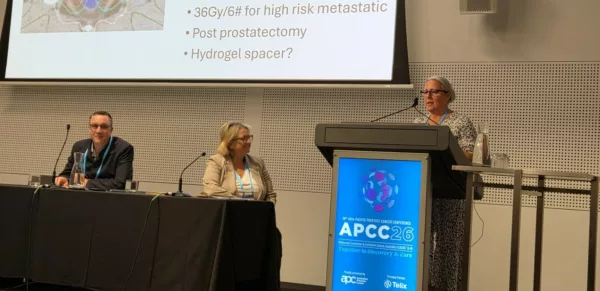
I started performing nurse led transrectal ultrasound guided prostate biopsies in 2007, and in 2020 (during COVID), I introduced a nurse led local anaesthetic transperineal prostate biopsy service. A couple of years later, I set up the LATP workshops for BAUN and recently worked with NHS England to create the BAUN/BAUS Guidelines. On the back of this, I was approached to speak at the Asia-Pacific Prostate Cancer Conference (APCC2026) in Melbourne, Australia this summer.
When I was first asked I thought, ‘Why me? What can I teach them that they don’t already know? After some conversations, it was made clear that some of what I needed to do was talk about my practice in the NHS in the UK. As I was travelling so far, I said I’d be prepared to do as many sessions as they wanted, so ended up presenting 5 times over 3 days. Having written the presentations and sent them off, in the week before travelling I had serious imposter syndrome: ‘What if I wasn’t good enough? What if they were disappointed’?
I need not have worried; they were very welcoming. It was good that there was some interaction and, after my presentations, some of the delegates asked for some of my protocols and contact details. My session on ‘Keeping Men Healthy on Hormones’, which included the nurse led reviews, was very popular and, since my return, I have heard that two hospitals in Sydney are looking to introduce this. A nurse consultant in Melbourne is working on nurse led ARPI clinics and another nurse is hoping to get LATP off the ground. The healthcare model in Australia is different to the UK, but there are many similarities. It was a fantastic opportunity, and I felt very privileged to have been asked to share my knowledge at the APCC in Melbourne.